Monday, April 18, 2016

How many infectious medical waste?

Polaris Energy saving News: With the extensive use of the health care industry and the
development of medical disposable products, medical waste generation is growing rapidly.
The latest data show that there were 261, in the city to the community solid waste
pollution prevention information, only these 261 cities this year, medical waste volume
reached 547,500 tons.

Another one statistics show that at the end of 2012, the total number of medical
institutions of 950 297 beds 5.7248 million, according to an average of 1 kg per bed
medical waste each day, the total amount of medical waste generated in the country each
year to reach 200 million tons.

Faced with such a huge amount of waste generated, but many cities are composed of one or a
small number of waste disposal in a single way of handling medical waste incineration. Once
a case of waste incineration plants shut down, the government and the hospital in the
management of medical waste and daily operations, will face enormous challenges.

In fact, hospital waste generated a large part of municipal solid waste and similar low-
risk waste, about 75% to 90%, the remaining 10% to 25% are considered harmful, it may pose
a health risk, hospitals infectious waste is generally not more than 10% of the total
garbage. Reduce the amount of waste generated must be effective category management as the
premise, but now garbage classification level of the hospital, worrying.

Medical waste collection is key to the implementation of environmentally sound management
of medical wastes, but most Chinese hospitals do not pay attention to the sort processing
medical waste, and open place, no obvious signs, classification level is not high.

General hospital with normal household trash bins and yellow medical, hospital and clinic
staff told Post logo, the swab and other body fluids come into contact with the patient
garbage into yellow garbage bag. But the reporter visited some hospitals found that blood
tests and outpatient medical room yellow garbage bags of medical waste both regions, but
also paper, food packaging and other general household waste.

A survey conducted in a hospital in Wuhu, Anhui Province shows that at some medical
personnel classification concept is unclear, non-infectious waste, such as medical supplies
packaging, special medical waste mixed with yellow bag. Although such an approach did not
cause harm to the spread of disease, but it increases the cost of processing medical waste.

Survey on the status of management and disposal of medical waste in a primary hospital also
showed that the passing rate of garbage deposited only 45%. The survey also pointed out
that a lot of medical waste in the absence of sterilization, transported to the transfer
station processing, which may cause secondary pollution garbage occur during transport.

Many local medical waste disposal fee is calculated according to bed, the amount of waste
generated by hospitals not directly related to the processing fee paid. If the hospital
improve the management level, reducing the amount of waste generated, and the same number
of beds, garbage fees will not be reduced, so that is not conducive to encouraging
hospitals source waste separation and reduction.

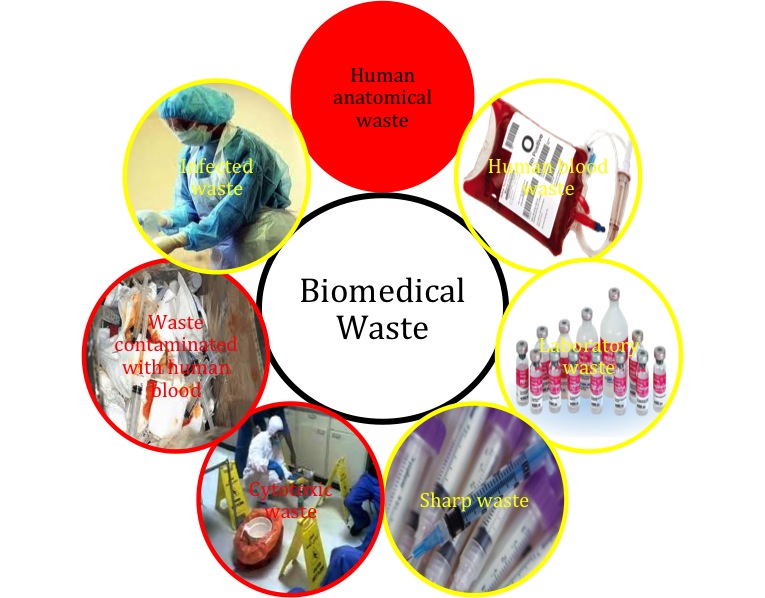
Medical waste are complicated, including infectious wastes, pathological wastes, chemical
wastes and damaging waste, etc., relating to different textile materials, plastics, glass,
metal and human organizations, a single treatment is difficult to achieve for a variety of
medical garbage harmless treatment.

For different types of medical waste, we have a different processing method and apparatus
have been developed and used around the world. In order to reduce global pollution of
dioxins and furans, the Stockholm Convention on Persistent Organic Pollutants and the World
Health Organization recommends the use of other alternative forms burned. Autoclaving is
probably the most widely used non-burning disinfection, in addition to chemical processing
technology, processing technology and microwave plasma processing technology.

China is now widely used is incineration, this approach tends to produce large amounts of
harmful gas mixture, including hydrochloric acid, dioxins and furans, as well as toxic
metals lead, cadmium and mercury.

A more complete medical waste incineration system shall include the feed system,
incinerator, combustion air system, start the ignition and burn-assisted system, flue gas
purification system, and the residue handling system, automatic monitoring system and
emergency system, which flue gas cleaning system is used to cut dioxin, mercury and other
highly toxic substances by incineration. However, research shows that some old equipment
medical incinerators, waste is a direct smoke exhaust emissions.

South China Institute of Environmental Sciences once a medical waste incineration plant in
Guangdong Province as the research object, through the collection and analysis incineration
plant and the surrounding soil and plant samples, PAHs understand incineration plant (PAHs)
distribution, sources and pollution levels. The results show that medical incinerators soil
surrounding a certain degree of contamination of PAHs detected in the soil 16 polycyclic
aromatic hydrocarbons, PAHs total amount ranging 11.83ng / g ~ 788.24ng / g, mean 236.681ng
/ g; in the study area downwind of the prevailing winds in the soil, total PAHs were
significantly higher than the prevailing winds soil content, and the total concentration of
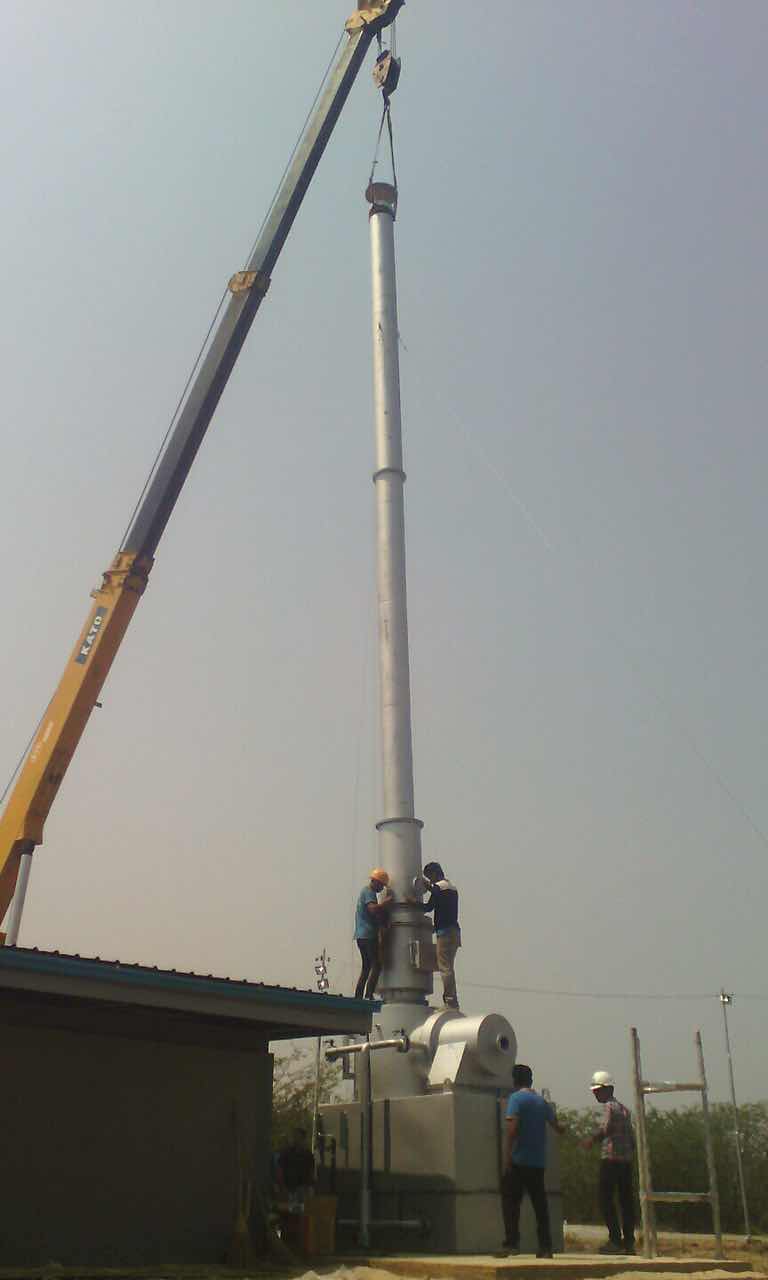
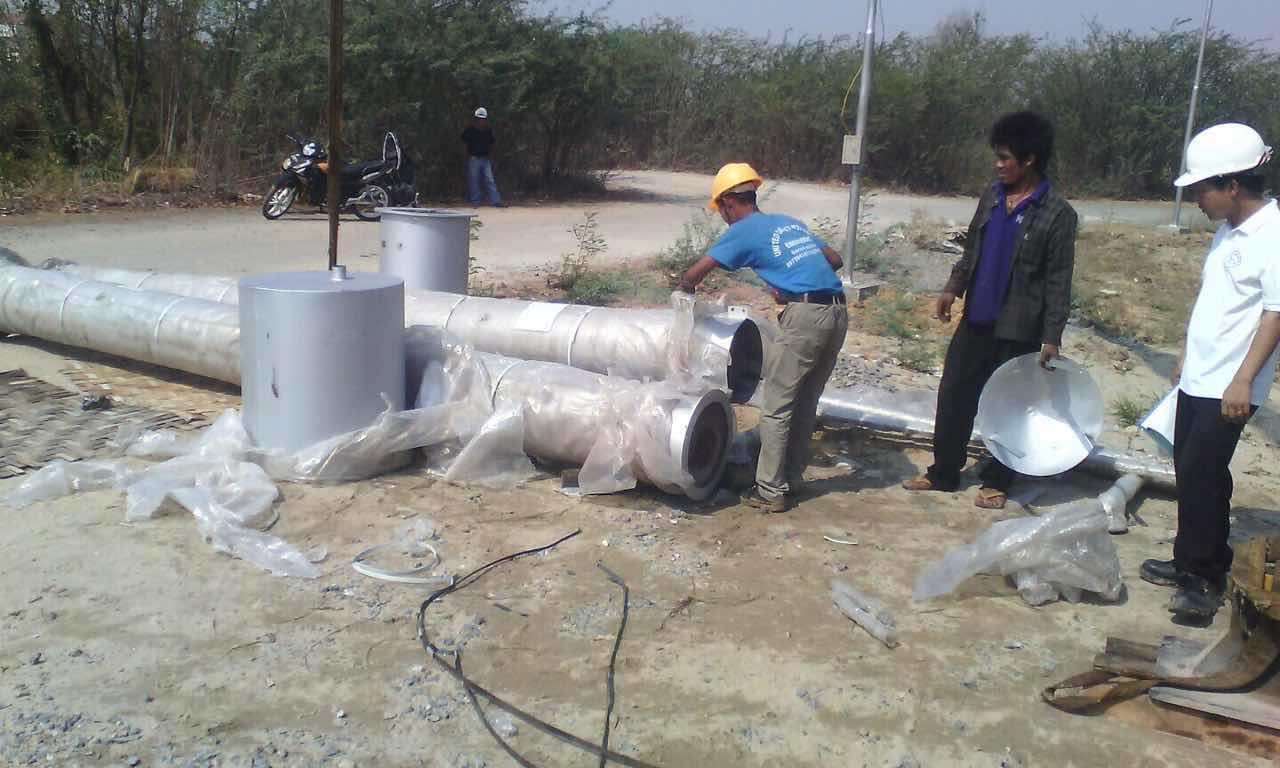
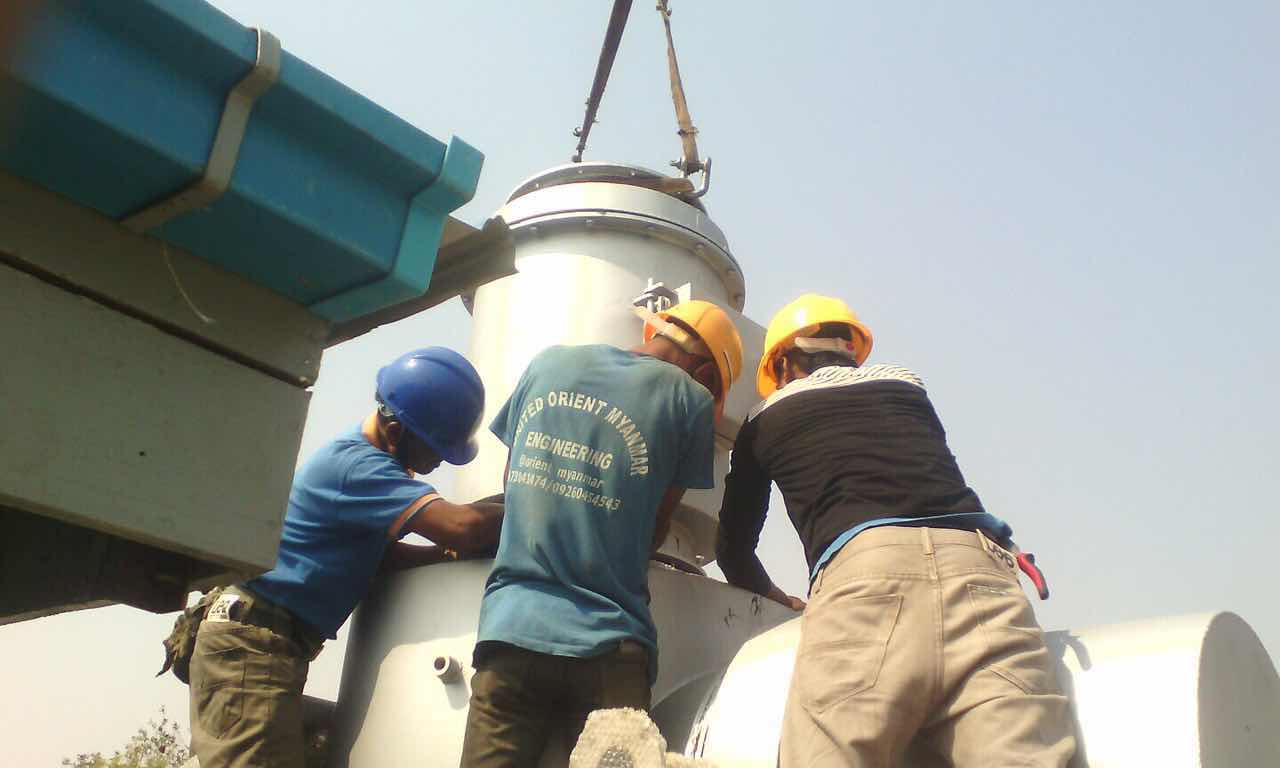
PAHs in soil increases with distance showed a gradual decrease.medical incinerator

Orignal From: How many infectious medical waste?

Wednesday, March 23, 2016

Waste incineration industry momentum is fierce level of related facilities to be improved

[China] Solid Waste Environmental online waste incineration industries development momentum is fierce, and the brightest of capital chasing even appear several times in the last year the price of handling fee diving, industry raised concerns about the vicious competition. "Thirteen Five" during garbage construction market investment space at 1000 billion yuan; the growing garbage incineration capacity of the operation of the facility, the regulatory level challenges. Many industry companies said in simple incineration links, market competition is too fierce, competitive professional enterprises should play in the field of business models and technological innovation.

Waste incineration industry momentum is fierce level of related facilities to be improved

"Twelve Five" is a fast-growing garbage incineration five years. According to relevant statistics, in 2015, the national city and county has accumulated garbage incineration capacity of about 233,000 tons / day. Waste incineration industries development momentum is fierce, and the brightest of capital chasing even appear several times in the last year the price of handling fee diving, industry raised concerns about the vicious competition. Which is still used as the main way of landfill waste, mostly due to the local authorities responsible for managing the operations, the market is not high, remain "low key."

The future will continue to heat a cold do?

In this regard, some experts pointed out that, on the one hand, waste incineration will continue to grow, but the amount of accumulation and qualitative improvement of equal importance, particularly waste incineration emissions formal implementation of new standards for operation of the facility and set higher requirements; on the other hand landfill as an indispensable and irreplaceable resource, is still dealing with the mainstream. But to find out the remaining storage capacity, make good use of good management will become critical; at the same time, non-canonical transformation landfill, pollution, etc. also brought closure to repair the relevant market opportunities.

According to the deputy director of the Research Center for Environmental Health Engineering Department of Housing and General Workers Liujing Hao introduction, facility upgrades will be the next five years, important content. "China's solid waste disposal facilities (landfill, incineration plant) construction and development is very fast, there are a number of construction and operation of the facility has a large room for improvement. There are many old landfills need to maintain and update, so as not to pollute the surrounding environment. Some of the early construction of incineration plants need to be upgraded or reset. "

Incineration facilities is still on the rise

"Thirteen Five" during garbage construction market investment space at 1000 billion yuan; the growing garbage incineration capacity of the operation of the facility, the regulatory level challenges.

'Facilities' second five' plan basically completed the goal. "China Urban Environmental Health Association and vice president, director of the Research Center for Environmental Health Engineering Department of Housing and Xu Wenlong said that according to" the "second five" national urban domestic garbage treatment facility construction plan, "clearly incineration project the total size of 307,200 tons / day. Although the end of 2015, the national total incineration capacity of 233,000 tons / day, but the size of the project currently under construction there of about 10 tons / day, and basically complete the planning and construction scale.

Planning and completion of high interest capital markets has a direct relationship. Construction and operation of waste incineration facility has become one of the segments of capital chasing the parties, after the project in a constant rise to fierce "fight."

The next five years, incineration facilities construction market is still big? In this regard, the Executive President of the Institute of E20 Xue Tao believes that incineration facilities will maintain growth. "In the construction of garbage 'Thirteen Five' period, probably in the investment market space, building space is at 100 billion yuan."

Xu Wenlong believes that new market does still have a better chance. Currently, most of the city and most of the county's garbage can be effectively collected and treatment and disposal in sanitary landfill and incineration plants. But still there are gaps in waste disposal facilities, the new facility is still one of the main tasks of the current and the next five-year plan. "According to the relevant national planning, the national MSW incineration capacity in 2020 will exceed 40 tons / day in 2025 up to 50 tons / day. By then, China's demand for incineration facilities will reach a relatively stable state."

Accumulation in the continued qualitative improvement already started. From January 1 this year, all new country, has been running garbage incinerator must perform a new "garbage burning pollution control standards" (GB18485-2014) (hereinafter referred to as the new standard) of emission limits. New standards for conventional pollutants, dioxin contamination compared to the previous standard have more stringent requirements.

(Source: China Association of gravel)
Article Links: China Environmental Protection online http://www.hbzhan.com/news/detail/105016.html635925914052780791754

Orignal From: Waste incineration industry momentum is fierce level of related facilities to be improved

Thursday, March 17, 2016

Waste Management Planning

The generator of a waste is responsible for its safe management from cradle-to-grave. Using raw materials efficiently and reducing the amount of waste generated is the most important step in waste management planning.  For example, through improved waste management planning, it may be possible to reduce or eliminate the need to burn or incinerate waste altogether.  Undertaking a waste audit will help to identify the type and amount of waste being generated, the costs of current management options and examine opportunities for better managing the waste. This information will also enable the generator to implement a waste management regime that is tailored to its own unique needs, location and circumstances.

Even with improved waste reduction measures in place there will be waste generated.  Waste by its nature is usually a mixture of different unwanted materials. The segregation and diversion of different types of waste is an effective way to reduce the amount of waste requiring costly handling, storage, treatment and disposal. Segregation also enables the reuse of certain types of waste for a different purpose.  Reuse activities may be undertaken either on-site or off-site.

Treatment and disposal is the last step in effective waste management and should be undertaken only after all other practical reduction and reuse options have been examined.  A wide variety of treatment and disposal options exist and each must be examined before deciding on a final method, regardless of whether waste is to be treated and disposed of on-site or off-site. If burning and incineration is the method of choice, equipment must be designed and sized accordingly to accommodate the type and quantity of waste being produced. As described in the following section, open burning is capable of safely destroying a limited number of types of waste. While incinerators are capable of safely destroying a wider range of waste, many types of waste must still be diverted. Because of this, on-site segregation remains a critical component of any waste management plan.

Overall, the following principles should be used to guide responsible solid waste management planning:

Know your waste by conducting a waste audit.
Reduce the amount of solid waste produced by implementing strategic purchasing policies that focus on the substitution or reduction of purchased products as well as product design, composition and durability.
Reuse waste where different purposes can be identified.
Segregate and divert mixed waste streams enabling waste to be reused or recycled, thereby reducing the amount of waste to be disposed of.
All practical disposal methods should be examined. Burning and incineration of waste should be considered only where other practical methods do not exist.

If burning and incineration is used, the equipment chosen should be designed and sized to accommodate the waste produced, minimize fire hazard and result in the complete combustion of the waste.

Orignal From: Waste Management Planning

Wednesday, March 16, 2016

hazardous and biomedical waste

The role of municipal governments is important in the proper local management of solid waste. Under the Nunavut Land Claims

Agreement, municipalities are entitled to control their own municipal disposal sites. Local environmental and safety

standards are determined, in part, by how the land is designated under municipal government development plans (i.e. land use

zoning).  Solid waste may be deposited into municipal landfill sites only with the consent of the local government. The local

fire department may also be called upon if a fire or other public safety issue is identified.

Solid waste incinerators are engineered systems that are capable of routinely achieving burn temperatures in excess of 1000oC

and a holding time of at least one second. Properly designed and operated incinerators are able to effectively and safely

destroy a wide range of waste.  Only incinerators designed for burning mixed municipal solid waste are discussed in the

guideline. The incineration of

hazardous and biomedical waste and sewage sludge requires specific equipment, operational controls and training that are

beyond the scope of the current document.

There are four basic types of incinerators. They vary based upon the number of burn chambers they have, the amount of air

provided to each chamber and how waste is fed into the primary burn chamber.

hazardous waste, biomedical waste

Dual-Chamber Starved    The primary burn chamber receives less air than is needed to achieve full
Air System    combustion. Gases from this incomplete combustion then pass into a second burn chamber where sufficient air

is injected and complete combustion is achieved.

Single Chamber Excess    More than a sufficient amount of air (as much as 50% more than the amount
Air System    of air needed) is injected into the single burn chamber to achieve complete combustion of the waste.

Continuous Feed    An incineration process that is in a continuous burn cycle.  A continuous feed
Incinerator    incinerator operates without interruption throughout the operating hours of the facility by having waste

continually added to the primary burn chamber.

Batch Feed Incinerator    An incineration process that is not in a continuous or mass burning cycle.  A batch feed incinerator

is charged with a discrete quantity or single load of waste at the beginning of the burn cycle.

Batch feed dual-chamber controlled air incinerators currently operate at several remote industrial locations in northern

Canada and Alaska.  Although they are generally considered to have the highest qualities of all the incinerators and open

burning methods mentioned, they must be designed for the type and quantity of waste to be burned. Too little heat and holding

time will not allow waste to burn properly; too much heat will damage the incinerator.

Figure 5 illustrates the design of a typical batch feed dual-chamber controlled air incinerator. The main features of this

type of incinerator are:

Batch operation allows greater control of temperature and air throughout the burn process. Air turbulence can be reduced in

the primary chamber so fewer particulates are released into the air from the stack.
Although a wide range of wastes can be destroyed, waste may have to be segregated and remixed in order to achieve a

uniform heating value close to the design point of the incinerator.
Externally supplied fuel and electricity are needed for the burners and forced air ventilation. A properly operating dual-

chamber controlled air system will reduce problems with animal attraction as the production of bottom and fly ash and smoke

is minimized.

Section 2.3.2 is intended to provide the reader with a brief introduction to incinerators. It is not intended to provide

information suitable for the design, selection or operation of an incineration system. Any person considering the purchase of

an incineration system should first consult the system's manufacturer or other qualified persons with expertise in the

incineration of solid waste.

Orignal From: hazardous and biomedical waste

Tuesday, March 15, 2016

ENVIRONMENTAL PROTECTION Incinerator Reference Information

Aboriginal Affairs and Northern Development Canada (AANDC). Handbook of Reclamation Techniques in the Yukon, (1999).


Alaska Department of Environmental Conservation and Alaska Energy Authority. Burning Garbage and Land Disposal in Rural Alaska, (2004). http://www.akenergyauthority.org/AEAdocuments/BurningGarbage.pdf


Canadian Council of Ministers of the Environment (CCME). Canada-Wide Standards for Dioxins and Furans Emissions from Waste Incinerators and Coastal Pulp and Paper Boilers, (2001). http://www.ccme.ca/assets/pdf/d_and_f_standard_e.pdf


Canadian Council of Ministers of the Environment (CCME). Canada-Wide Standards for Mercury Emissions from Base-Metal Smelters and Waste Incinerators, (2000). http://www.ccme.ca/assets/pdf/mercury_emis_std_e1.pdf


Canadian Council of Ministers of the Environment (CCME). National Guidelines for Hazardous Waste Incineration Facilities – Design and Operating Criteria, (1992). http://www.ccme.ca/assets/pdf/pn_1076_e.pdf


Canadian Council of Ministers of the Environment (CCME). Operating and Emission Guidelines for Municipal Solid Waste Incinerators, (1989).

http://www.ccme.ca/assets/pdf/pn_1085_e.pdf


Canadian Council of Ministers of the Environment (CCME). Provisional Code of Practice for the Management of Post Use Treated Wood, (1996). http://www.ccme.ca/assets/pdf/pn_1227_e.pdf


Environment Canada (EC). Protocols and Performance Specifications for Continuous Monitoring of Gaseous Emissions from Thermal Power Generation. Report EPS 1/PG/7, (1995). http://www.ec.gc.ca/Publications/844D7CF3-2F1D-4CA0-9290- 0A885806F792/ProtocolsandPerformanceSpecs.pdf


Environment Canada (EC). Operation of a Modified Burn Barrel for the Destruction of Food Waste in Remote Locations: Observational Summary. Report ERMS 2011-01.


Environment Canada (EC). Technical Document for Batch Waste Incineration, (2009).

http://www.ec.gc.ca/gdd-mw/default.asp?lang=En&n=F53EDE13-1


Government of Nunavut, Department of Environment. Environmental Guideline for General Management of Hazardous Waste, (2010).

http://env.gov.nu.ca/node/82#Guideline Documents


Government of Nunavut, Department of Environment. Environmental Guideline for Industrial Waste Discharges into Municipal Solid waste and Sewage Treatment Facilities, (2011). http://env.gov.nu.ca/node/82#Guideline Documents

Orignal From: ENVIRONMENTAL PROTECTION Incinerator Reference Information

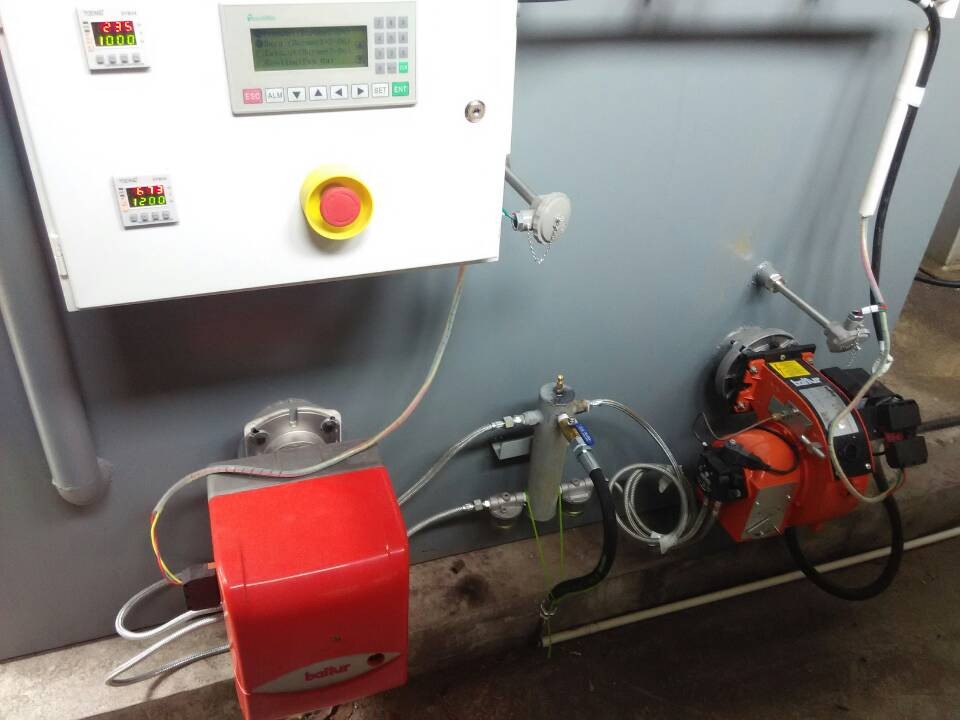
Incinerator Burner oil system

This picture indicate how to contact the incinerator diesel oil tube and also the temperature probe.

Incinerator Burner oil system

Orignal From: Incinerator Burner oil system

Monday, March 14, 2016

Incinerator Maximizing Combustion Efficiency

More smoke and other pollutants are released into the air during the 'start-up' and 'cool down' phases of the burn cycle

than during the 'full burn phase' when high temperatures are maintained.    Low temperature smoldering fires should be

avoided. Burn only dry feedstock and periodically add additional waste to the fire in order to maintain high burn

temperatures until all waste has been destroyed. If waste is to be open burned on the ground, the use of deep or steep-walled

'pits' should be avoided as this will prevent the necessary turbulent mixing of oxygen with the burnable gases.

Desired operating temperature should be achieved as quickly as possible when operating any burning or incineration device.  A

rapid 'start-up' can be achieved by first loosely loading dry paper, paperboard packing and untreated wood into the bottom

of the device. Dry, loosely loaded material will ignite more quickly and burn more evenly than a wet, tightly packed load.

Wet waste should only be added after  the fire is actively burning.  Overfilling the burn chamber will prevent the turbulent

mixing of burnable gases and oxygen, and should be avoided.

Modern batch feed incinerators are designed with primary and auxiliary burners to achieve and maintain the necessary high

burn temperatures. Additional waste should only be added to these incinerators once the 'cool down' phase has been

completed and it is safe to do so.

Orignal From: Incinerator Maximizing Combustion Efficiency

Sunday, March 13, 2016

Air Emissions Environmental Standards CA

Air emission standards establish limits on the amount of contaminants that can be released into the atmosphere. These standards are expressed as a concentration in the exhaust gases leaving the stack and are capable of being achieved using generally available incineration technology and waste diversion practices. The following emission standards1 apply to existing, new or expanding solid waste incinerators operating in Nunavut and have been adopted from the Canadian Council of Ministers of the Environment (CCME) Canada-Wide Standards for Dioxins and Furans and Mercury Emissions, respectively.   Similar standards for the open burning of solid waste have not been established.

Table 1. Air Emission Standards for Solid Waste Incinerators

Parameter    Numeric Standard    Explanation

Dioxins and Furans
80 pg I-TEQ/cubic metre
Unit of measure is picograms of International Toxicity
Equivalents per cubic metre of air

Mercury
20 µg/Rcubic metre
Unit of measure is micrograms per Reference cubic metre (the volume of gas adjusted to 25oC and 101.3 kilopascals)


Opacity is the degree to which the exhaust gases reduce the transmission of light and obscure the view of any object in the background. It is expressed as a percentage representing the extent to which an object viewed through the gases is obscured. Although not an emission standard, opacity provides an indication of the general performance of the incinerator during normal operation2.  Opacity in the incinerator stack should not exceed 5%. While it is not anticipated that opacity levels would exceed 1% to 2% under normal operation, values greater than 5% indicate the incinerator is not performing properly and additional performance evaluation and adjustment is required.

Figure 6 - Examples of Smoke Opacity Ratings
The opacity ratings are estimates and are provided for illustrative purposes only
Centre and right photos courtesy of GNWT Department of Environment and Natural Resources

Orignal From: Air Emissions Environmental Standards CA

Saturday, March 12, 2016

The Application of Open Burning and Incineration

The Application of Open Burning and Incineration

The Department of Environment does not promote or endorse the burning and incineration of solid waste. This method of waste management should be implemented only after the owner or operator has made all reasonable and determined efforts to implement sound waste management planning and practices. Opportunities to reduce or eliminate the need for burning and incineration through changes in purchasing practices, reuse, recycling, segregation and diversion, and other changes or emission control upgrades that would result in emission reductions, must be reviewed periodically and implemented where practical.  Refer to section 3 for additional information on best management practices.

This section provides guidance on the application of open burning and incineration of solid waste. In addition to the guidance and direction provided through the Guideline, the burning and incineration of solid waste may also be controlled through permits and licenses issued by Nunavut's co-management boards, Aboriginal Affairs and Northern Development Canada and other regulatory agencies. These permits and licenses must be complied with at all times.

4.1    Open Burning

Open burning is the burning of solid waste where limited or no control over the combustion process can be exercised by the operator.  For the purposes of the Guideline, open burning includes burning waste that has been piled on the surface of the ground or placed in small open pits, or the use of a burn box, unmodified burn barrel or modified burn barrel. Open burning does not include the destruction of waste using a commercial or manufactured incinerator.

The open burning of unsegregated, or mixed, solid waste must not occur under any circumstances. Today's household, institutional, commercial and industrial garbage contains many materials which, when burned at low temperature, can result in the release of high levels of particulates, acid gases, heavy metals, carbon monoxide, dioxins, furans and other chemicals, some of which may cause cancer. The only solid wastes that may be disposed of through open burning are paper products, paperboard packing, untreated wood waste and natural fiber textiles (i.e. cotton, wool).  Refer to section 3.2 for further information on what waste can and cannot be burned.

The open burning of solid waste remains a hazardous practice from a fire prevention and environmental management perspective.  Open burning on the ground should not take place within a municipality without first obtaining authority to do so from the local community government. It should never occur at a municipal or industrial landfill because of the proximity of other combustible wastes within the working landfill. Where permission has been obtained and paper, paperboard packing, untreated wood waste and natural fiber textiles are open burned on the ground or in a small open pit, the activity must be attended and carefully monitored by a responsible adult at all times.

The preferred alternative to open burning on the ground is the use of an enclosed burn box or burn cage. These devices should be used when burning a moderate to large quantity of paper, paperboard packing, untreated wood waste and natural fiber textiles. They are designed to contain the waste while it is burning and reduce the likelihood of sparks or burning embers igniting adjacent vegetation and other combustible materials. When using a burn box or cage at a municipal or industrial landfill, extreme caution must be taken to ensure other areas of the working landfill are not ignited. Their


proper operation includes loading the device with dry waste to about half its capacity before igniting the fire.  Additional or wet waste can be added in small batches so as not to dampen the fire once the fire has developed into a good flame and it is safe to do so.

The following general conditions should be met whenever open burning on the ground or burning using an enclosed burn box or burn cage takes place:

Only paper, paperboard packing, untreated wood waste and natural fiber textiles are burned. The waste is burned in a controlled manner and at a site which is separate from combustible vegetation and other materials.
Burning takes place only on days when winds are light and blowing away from people. Waste is burned in manageable volumes so the fire does not get out of control.
The fire is started, attended and monitored at all times by authorized and qualified personnel. The waste is kept dry or covered to the extent practicable prior to burning.
Where applicable, authority is first obtained from the municipality or other regulatory agencies.

Modified or unmodified burn barrels should only be used to burn small quantities of paper, paperboard packing, untreated wood waste and natural fiber textiles at remote locations such as traditional camps and field camps.  Food and food packaging waste, which make up a significant portion of kitchen garbage produced at these camps, should not be burned. These wastes should be segregated daily and stored in wildlife-proof containers for frequent removal to an approved disposal site.

It is important that burn barrels are properly constructed and operated to ensure safety of the operator and the environment. Appendix 2 provides detailed construction drawings for a modified burn barrel. The Department of Environment will consider other designs if they provide an equivalent level of environmental protection.

Below are some easy-to-do actions to ensure unmodified and modified burn barrels are operated safely and waste is burned to the greatest extent possible6.

When locating and constructing a burn barrel:

Locate the burn barrel in a place predominantly downwind of the camp site or burn only on days when the wind is light and blowing away from the camp.
Ensure the burn barrel is located on gravel, rocky outcrop or other area free of combustible materials and vegetation to avoid accidently starting a tundra fire.
Ensure the detailed plans provided in Appendix 2 are carefully followed when constructing a modified burn barrel. The 'exhaust gas to combustion air' ratio is particularly important to achieving the maximum burn rate.  A 2:1 ratio of exhaust stack to air intake area consisting of a 6-inch exhaust port and three 2-inch air intake holes positioned equidistantly around the bottom of the barrel a few inches up from the base is preferred.


6 Testing of a modified burn barrel was performed by Environment Canada's Air Quality Research Division in April 2011 at the request of Nunavut's Department of Environment. Ten trial burns were completed prior to emissions testing in order to optimize and standardize barrel design and operational procedures. Following the trial burns, four test runs were performed and air emission samples collected for analysis. Results of the emission testing program will be available from Nunavut's Department of Environment.  This list of recommended practices reflects the operational observations and measurements made during the testing program.


When operating a burn barrel:

Inspect the barrel for any signs of leakage, corrosion or other physical defects before each burn cycle. Any necessary repairs must be completed before the equipment is used.
Burn only dry waste. If wet waste must be burned, mix or batch the waste with other waste that has a low moisture content and high heating value (i.e. dry wood). This will help ensure the slow-burning wet waste is completely burned.
Burn only paper, paperboard packing, untreated wood waste and natural fiber textiles. Food and food packaging waste should not be burned. Burning non-combustible waste (i.e. metal
and glass) will rob the fire of valuable heat and should also be avoided.  Food and food packaging, non-combustible and other waste that cannot be burned should be segregated and removed from the site for disposal on a regular basis.
Do not overfill or densely pack waste into the burn barrel as air will be prevented from properly mixing with the waste. This will result in a smouldering, low temperature burn and smoke.
Layering wet or slow burning waste with dry fast burning waste will help ensure more complete combustion of all waste.
The burn barrel should not be used unless a responsible adult is available to monitor and watch over it until the fire has completely cooled.
When using a modified burn barrel, the exhaust port on the 'metal basket insert' should be aligned between two of the 2-inch air intake holes in order to avoid short-circuiting of the combustion air directly through to the stack.  Also, the spark arrest screen should be cleaned following each burn to ensure the stack does not become blocked with soot and other debris. If the barrel lid begins to 'puff' during a burn, inspect the screen to ensure it is not obstructing the flow of exhaust gases.

Care must be taken by the operator at all times to avoid skin contact with hot surfaces and avoid breathing smoke and other exhaust gases.

Written records of open burning should be kept by the operator. These record what was burned, when and how much, how waste was loaded into the device, how the fire was started, its location, weather conditions at the time and any other information that may help remind the operator of what worked well, and what didn't. These records are to be made available for review upon request by an Inspector.

Bottom ash from the open burning of paper, paperboard packing, untreated wood waste and natural fiber textiles is suitable for burial in a designated pit or municipal landfill site.  Consent to use a municipal landfill should first be obtained from the local government. Bottom ash must be completely cooled before it can be safely handled and disposed of.  Refer to section 3.6 for further information.

Orignal From: The Application of Open Burning and Incineration